
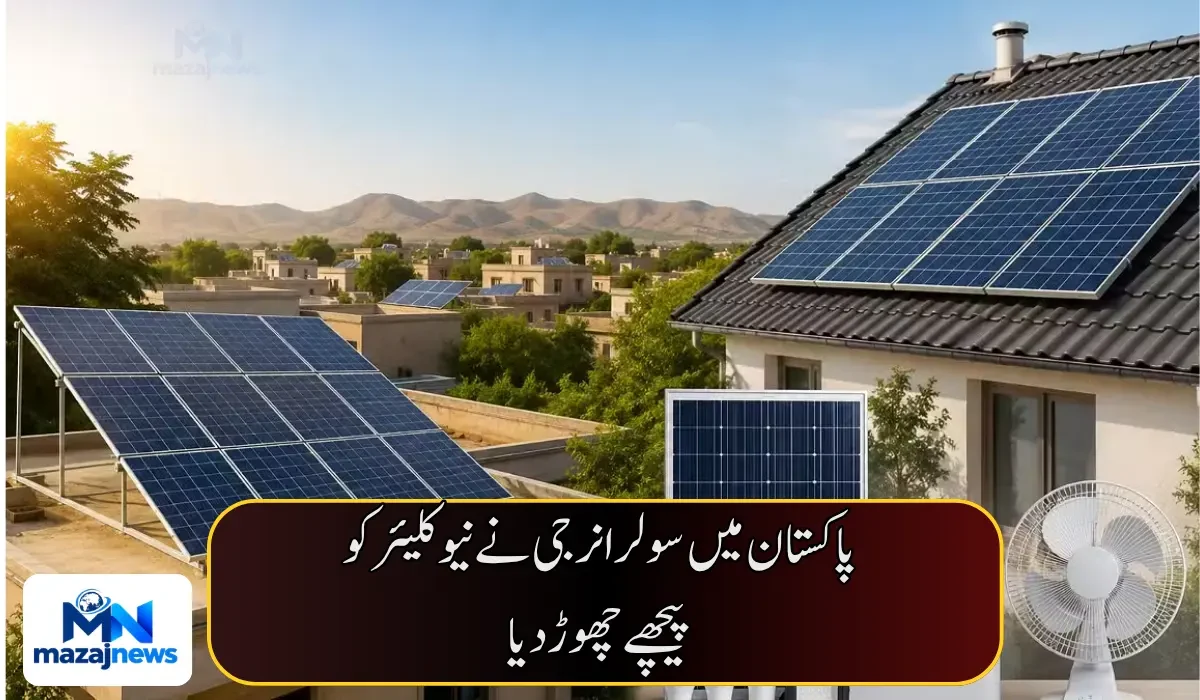
Solar Overtakes Nuclear as Pakistan’s Top Power Source
Pakistan’s energy landscape has shifted in a major way. Solar power generation surged far ahead of nuclear energy to become the country’s largest source of electricity in 2025, according to the World Nuclear Industry Status Report 2026. What makes this even more notable is that nuclear output itself also climbed to a record high during the same period, solar simply grew faster.
The Numbers: Solar vs Nuclear
Solar generation reached an estimated 36.3 terawatt-hours (TWh) in 2025, exceeding nuclear output by 61 percent.
Meanwhile, Pakistan’s nuclear electricity production rose 3.7 percent to a record 22.5 TWh, up from 21.7 TWh in 2024.
| Source | 2025 Generation | Change |
|---|---|---|
| Solar | 36.3 TWh | Up 85% from 2024 |
| Nuclear | 22.5 TWh | Up 3.7% from 2024 |
Pakistan generated roughly 60 percent more electricity from solar panels than from all six of its operating nuclear reactors combined in 2025.
The Real Number Could Be Even Higher
Here’s an important caveat the report raises. Solar generation figures may actually be underestimated. A large amount of privately installed solar capacity operates behind the meter, meaning it doesn’t feed into the public grid and therefore doesn’t get officially recorded. In other words, the true scale of Pakistan’s solar adoption could be even greater than the reported 36.3 TWh.

Pakistan’s Nuclear Fleet: Small But Expanding
Pakistan currently operates six nuclear reactors with a combined net capacity of around 3.3 gigawatts. All six were built by China National Nuclear Corporation (CNNC), including:
- K-2 and K-3 near Karachi
- Four CNP-300 reactors at the Chashma Nuclear Power Generating Station
Pakistan was among the countries that achieved their highest-ever nuclear production in 2025, so this isn’t a story of nuclear declining, it’s a story of solar simply outpacing it.
The nuclear fleet is also growing. CNNC is building the 1,000 MW Chashma-5 reactor, with construction formally starting in December 2024. The project is expected to be completed by 2030. Notably, the report describes C-5 as China’s only ongoing nuclear new-build project abroad, and one of only two non-Russian nuclear construction starts outside China during 2020-2025. That’s a genuinely significant distinction for Pakistan’s nuclear program on the global stage.
How Pakistan’s Solar Boom Actually Happened
The scale of Pakistan’s solar import surge is striking. The country imported more than 58 GW of solar panels from China between the beginning of 2017 and mid-2026. Of that total, around 40 GW, or 69 percent, was imported during just the two and a half years from 2024 to mid-2026.
This pace of adoption has made Pakistan China’s second-largest single-country solar panel market, trailing only the Netherlands. For a country Pakistan’s size and economic profile, that’s a remarkable position to hold.
Why Has Growth Been So Fast?
The report attributes much of this rapid growth to activity happening outside the formal grid. Private, unregistered photovoltaic installations have enabled significant self-consumption, meaning households and businesses are generating and using their own solar power rather than drawing from or feeding into the national grid.
This also helps explain something that might otherwise seem puzzling: a decline in recorded power consumption despite continued economic growth. If more electricity is being generated and consumed privately through rooftop solar, it simply wouldn’t show up in official grid consumption figures.
To put the scale of this growth in global context, the report notes that Pakistan installed about twice as much solar capacity in five years as France did in a decade. For a country not typically associated with renewable energy leadership, that’s a genuinely significant comparison.
The Financial Side of Nuclear Power
While solar has surged, the report also highlights a real financial burden tied to Pakistan’s newer nuclear plants. According to the Pakistan Economic Survey 2025-26, debt repayment makes up a significant part of the cost of nuclear electricity, mainly tied to K-2 and K-3.
Here’s the detail that stands out. Their 12-year debt repayment period represents only 20 percent of their estimated 60-year economic lifetime. In simpler terms, Pakistan is repaying a large chunk of these plants’ construction costs in a relatively short window compared to how long the plants are expected to actually operate, which concentrates the financial burden early in the plants’ lifespan.
Why This Matters for Pakistan’s Energy Future
This shift has real implications. Solar’s rapid, largely private-sector-driven growth suggests Pakistani households and businesses are increasingly taking energy generation into their own hands, likely driven by rising grid electricity costs and frequent reliability issues. Meanwhile, nuclear power continues to expand through large, centrally planned projects like Chashma-5, but comes with a heavier upfront financial burden.
For policymakers, this creates an interesting balancing act: formal grid planning now has to account for a growing share of electricity that’s being generated and consumed entirely outside its visibility, while continuing to manage the debt and long-term economics of nuclear expansion.